The store will not work correctly when cookies are disabled.
We use cookies to make your experience better.
To comply with the e-Privacy rules, we need to ask for your consent to use non-essential cookies (such as analytics and marketing). You can allow or decline these cookies. Essential cookies (for things like basket and checkout) will always be used. For more details, please see our Privacy Policy.
A white woman from Texas, Casey Hayden grew up in a place where Jim Crow reigned supreme until the 1960s.
Born Sandra Cason on this day in 1937, she rebelled against a social structure built to privilege her as a white person.
It helped that her immediate family were already non-conformist. Raised only by women, Hayden’s mum was the one divorced woman in their town.
But it was at the University of Texas that Hayden came into her full political consciousness.
The university was a vital institution for the Civil Rights Movement in America, even in the South, giving young people a space to think with freedom to change the world.
It was while studying English and Philosophy at university that Hayden became involved with anti-racism, initially through Christian student groups like the YWCA.
Hayden spoke against efforts at the National Student Association to disown the Student Nonviolent Coordinating Committee (SNCC) due to its sit-in campaign against segregation.
And she soon joined the Students for a Democratic Society (SDS), which combined support for the Black Civil Rights Movement with a wider push for progressive social change.
Malcolm X said that white people weren't allowed to join his black nationalist organisation, but joked that 'if John Brown were still alive, we might accept him.'
Working with the SDS and SNCC, Casey Hayden took part in the Freedom Rides in 1961, to challenge the racial segregation of interstate transport in the South.
Thereafter she became more and more involved in the movement, moving to Mississippi in 1963 to work on a SNCC-backed literacy project in a Black community near Jackson.
In 1964 she helped organise ‘Freedom Summer’ – a campaign of community activism and radical education projects in the South.
Around the same time, she led (unsuccessful) efforts to force Lyndon B. Johnson’s Democratic Party to expel segregationist ‘Dixiecrats’.
As a white Southern woman in the Black Freedom Struggle, Hayden didn’t see her activism as charity but instead recognised the Civil Rights Movement as necessary to the creation of a more democratic society for all Americans:
“As a Southerner, I considered the Southern Freedom Movement Against Segregation mine as much anyone else's. I was working for my right to be with who I chose to be with as I chose to be with them. It was my freedom.”
But SNCC was hit by a wave of reactionary violence in 1964, spearheaded by the Klan and its allies in Southern law enforcement.
This led to a period of organisational self-reflection, including proposals to build new alliances with the wider Sixties counterculture.
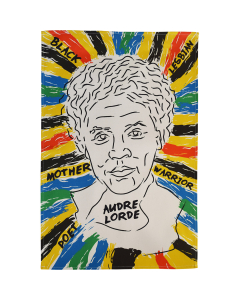
Both Lorde and Hayden saw the struggle against racism and the struggle against the patriarchy as interconnected
Hayden was one of SNCC writers of “Sex and Caste” in 1965, likening anti-Black racism to sexism in the U.S., and criticising the gendered division of labour within progressive movements like SNCC:
“Many people who are very hip to the implications of the racial caste system, even people in the movement, don't seem to be able to see the sexual caste system.”
The essay soon became a classic feminist text, tying Black liberation to feminism and demanding each live up to the other.
Hayden also took the side of progressives like Ella Baker to challenge the increased centralisation in SNCC, which was veering away from grassroots-led activism.
Her position on internal democracy ultimately led Hayden to break with SNCC, and she slipped into the background of the Civil Rights Movement.
But for the rest of her life, Casey Hayden remembered her time as part of the Freedom Struggle fondly:
“We were all out there doing whatever we thought up to do. We were totally self-directed people, and very few people have that experience.”
Who were our radical ancestors? What's the legacy we're following? To understand the present, we have to look back at our past, and that's exactly what Pete's radical history emails and blog posts do.
With so many remarkable individuals, It's impossible for Pete to choose his favourite figure from radical history, but if he had to, he'd say Sylvia Pankhurst: "She always appreciated that the struggles for feminist, economic, and racial emancipation are linked together, and she did all of her politics with that truth in mind. Also, like me, she's a Mancunian!"