The store will not work correctly when cookies are disabled.
We use cookies to make your experience better.
To comply with the e-Privacy rules, we need to ask for your consent to use non-essential cookies (such as analytics and marketing). You can allow or decline these cookies. Essential cookies (for things like basket and checkout) will always be used. For more details, please see our Privacy Policy.
Solidarity Without Borders: The Story of Tom Barker
Solidarity Without Borders: The Story of Tom Barker
Tom Barker was a socialist organiser and anti-war campaigner across three different continents...
“Let us get to work, we of the Industrial Workers of the World, we, the countryless, the pariahs, the hobos, the migratory workers… Economic conditions are bringing us together in spite of ourselves and we, the workers of the world, are dependent upon one another.”
Many labour radicals have travelled across the world, whether or not by choice.
But wherever they end up, they’ve always felt at home in the company of the working class.
Tom Barker knew this truth better than anyone.
Born on this day in Victorian England, he became a socialist organiser across three different continents.
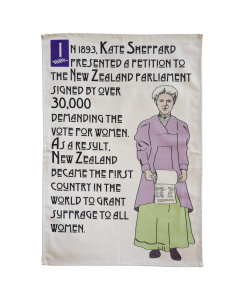
Like New Zealand suffrage hero Kate Sheppard, Tom Barker also emigrated from Liverpool to New Zealand
Barker was born into a family of poor rural farmworkers in northwest England.
After leaving the countryside for the port city of Liverpool, and a short stint in the British Army, Barker emigrated to Auckland, New Zealand, in 1909.
Once there, Barker became involved in the organised labour movement, to fight for his class.
He quickly became secretary of the New Zealand Socialist Party, before joining the ‘Wobblies’ of the Industrial Workers of the World (IWW) in 1913.
Barker had grown tired of the timidity of the moderate labour organisations and preferred the combative approach of the IWW, which had emerged out of the hard-fought class warfare of the American working class:
“I was absolutely convinced… that a strong and even ruthless working-class body was necessary to see that people were properly protected and paid.”
In 1913, Barker played a key organising role in the Aukland General Strike before the authorities managed to lock him up.
Our Radical Australia Map charts the historic campaigns of radicals and trailblazers like Tom Barker
Released in 1914, Barker moved to neighbouring Australia to carry on his Wobbly activism in Sydney.
He edited the IWW’s Australian paper, Direct Action, and promoted Marxist political theory to the Australian labour movement alongside other peregrine radicals like the Irishman Tom Glynn.
Tom Barker became a fixture of Australian labour radicalism, helping to organise strikes across multiple sectors, including miners and farm workers.
Barker had also moved to Australia just in time for the First World War.
With his help, the Wobblies became a leading force in the Australian antiwar movement, alongside some unexpected allies including the Roman Catholic Church – whose largely Irish working-class base was suspicious of the British Empire, to say the least.
Barker designed posters painting the war as workers being sent off to kill each other on the orders of their class enemies.
One was a mock recruitment advert reading:
TO ARMS !! Capitalists, Parsons, Politicians, Landlords, Newspaper Editors, and Other Stay-at-Home Patriots. Your Country Needs You in the Trenches! Workers, Follow Your Masters!
Anti-war radicals were being arrested and imprisoned on the regular, but they always had Barker as their voice.
Opposition to World War One united radicals across the world, including several leading figures in the women's suffrage movement
It was Barker who organised the global solidarity campaign for the Sydney Twelve, a group of Wobblies thrown in jail after the successful referendum campaign to prevent military conscription from being introduced in Australia.
Eventually, the Australian government had Barker deported as a foreign-born agitator. He was sent off on the first ship available, which happened to be sailing east to Chile.
But this didn’t stop Barker’s activism – there was a working class in South America, too, after all.
Barker joined the radical maritime workers union in Chile and then Argentina, before travelling to Central Europe and Revolutionary Russia for labour congresses during the 1920s.
After a final spell in Australia, Barker finally returned to England, where he remained a radical into his old age.
As a Labour Party councillor in St. Pancras, he was still waging the class struggle during the 1950s.
He threatened the Tory government with civil disobedience if it imposed rent increases on social housing, and flew the Red Flag from the townhall every May Day.
One of the many great voyagers of twentieth-century labour, Tom Barker was a Magellan of the workers, sailing from continent to continent, spreading the gospel of class struggle.
Who were our radical ancestors? What's the legacy we're following? To understand the present, we have to look back at our past, and that's exactly what Pete's radical history emails and blog posts do.
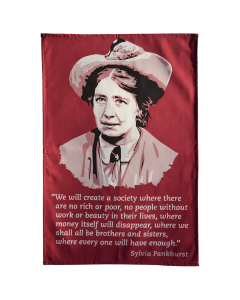
With so many remarkable individuals, It's impossible for Pete to choose his favourite figure from radical history, but if he had to, he'd say Sylvia Pankhurst: "She always appreciated that the struggles for feminist, economic, and racial emancipation are linked together, and she did all of her politics with that truth in mind. Also, like me, she's a Mancunian!"