The store will not work correctly when cookies are disabled.
We use cookies to make your experience better.
To comply with the e-Privacy rules, we need to ask for your consent to use non-essential cookies (such as analytics and marketing). You can allow or decline these cookies. Essential cookies (for things like basket and checkout) will always be used. For more details, please see our Privacy Policy.
Gough Whitlam led a reformist government in Australia between 1972-75, transforming the country in just three years
“A conservative government survives essentially by dampening expectations and subduing hopes. Conservatism is basically pessimistic, reformism is basically optimistic.”
Most countries have enjoyed at least one truly transformative government.
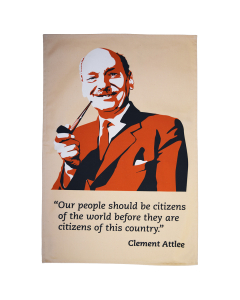
It was FDR in the U.S., Clement Attlee in Britain, Olof Palme in Sweden.
In Australia, this role was played by Gough Whitlam’s Labor government of 1972-1975.
Australians have an immense history of labour radicalism, going back to the Wobblies and beyond.
Whitlam wasn’t part of this revolutionary tradition. He was a reformer instead.
But his social democratic government transformed Australia, championing a range of movements from gender equality and healthcare to Aboriginal sovereignty.
Whitlam also stands out for the outrageous way in which his government was brought down, by a “constitutional coup d’état” carried out by the royal power of the Queen of England.
In Britain we had Clement Attlee; in Australia, they had Gough Whitlam
Whitlam was born on this day in 1916, into a middle-class Melbourne family.
He went to study Classics then Law at the University of Sydney, shortly before WW2.
Whitlam enlisted and served in the Royal Australian Air Force, where he also began activism for the Australian Labor Party (ALP).
After the war, he began to rise through the ranks of the ALP.
He was first elected to the Australian House of Representatives in 1952, for Werriwa in New South Wales, and he became Deputy Leader of the ALP in 1960.
This was against the backdrop of two decades of Liberal Party dominance in Australia after the last Labor government was defeated in 1949. The Liberals were the main conservative party.
Meanwhile, Whitlam won the Labor leadership in 1967.
After years of election defeats, he represented a younger, more ambitious form of social democracy.
Against the backdrop of rising unemployment and Australian involvement in the unpopular American war in Vietnam, Whitlam developed a new program for the ALP.
It included more federal funding for education, a stronger commitment to free healthcare, and dropping Labor support for the racist immigration policy of ‘White Australia’.
Whitlam first became engaged in the Australian Labor Party while serving in World War Two
On 2 December 1972, Whitlam was elected Prime Minister in a landslide.
His government got to work right away.
In foreign affairs, Whitlam pulled the last Australian troops out of Vietnam and amnestied draft resisters.
Whitlam also joined the U.S. in recognising the People’s Republic of China, in the interest of a more peaceful Asia-Pacific.
And he announced Australian support for sanctions on apartheid South Africa and Rhodesia.
At home, Whitlam’s government backed the expansion of women’s reproductive rights and more equal pay, and he introduced no-fault divorce in 1975.
He abolished university tuition fees and created a Department of Urban Development, and legal aid was launched nationwide.
Whitlam also began reducing the British fetters on Australian national life, including by phasing out the anthem ‘God Save the Queen’ and instituting the Order of Australia as an alternative to the arcane honours system in Britain.
The Whitlam government agreed to the decolonisation of Papua New Guinea, too, which was an Australian colony, and he initiated the process of Aboriginal land reform by recognising Gurindji rights in the Northern Territory.
This last measure responded to the radical popular pressure of the Aboriginal movement in Australia during the 1970s.
Our Radical Australia map celebrates the deep history of radicalism across the country
But for all its radical reformism, Whitlam’s government is still best (or worst) remembered for how it ended rather than what it did.
Labor didn’t have a majority in the Australian Senate, and the Liberals under Malcolm Fraser began using this imbalance to defund the government.
Whitlam had always seen the Senate as institutionally anti-democratic, and now it would be his downfall.
By defunding the government, Fraser hoped to make the country ungovernable and so force the Governor-General, Sir John Kerr, to dismiss Whitlam.
Australians had been assured the Governor-General – an unelected appointee of the Queen of England – was ‘merely symbolic’.
But that now proved to be a lie.
Governor-General Kerr brazenly went along with Fraser’s scheme and dismissed Whitlam as Prime Minister on 11 November 1975.
Whitlam and the Labor Party saw it as a constitutional coup d’état: a wild, antidemocratic overreach of royal power in Australian politics.
Despite this, Whitlam still lost the subsequent general election. The global economic crisis resulting from the 1973 oil shock overwhelmed his government.
But Whitlam’s radical administration transformed Australian society and Australia’s place in the world.
It was one of the standout social democratic governments of the late twentieth century.
Who were our radical ancestors? What's the legacy we're following? To understand the present, we have to look back at our past, and that's exactly what Pete's radical history emails and blog posts do.
With so many remarkable individuals, It's impossible for Pete to choose his favourite figure from radical history, but if he had to, he'd say Sylvia Pankhurst: "She always appreciated that the struggles for feminist, economic, and racial emancipation are linked together, and she did all of her politics with that truth in mind. Also, like me, she's a Mancunian!"