The store will not work correctly when cookies are disabled.
We use cookies to make your experience better.
To comply with the e-Privacy rules, we need to ask for your consent to use non-essential cookies (such as analytics and marketing). You can allow or decline these cookies. Essential cookies (for things like basket and checkout) will always be used. For more details, please see our Privacy Policy.
More than 200,000 African Americans served in the Union military during the Civil War. Almost 40,000 gave their lives fighting for abolition.
But for a time, Black men weren’t allowed to join Abraham Lincoln’s army and navy.
Racism and political cowardice among Union statesmen held them back from arming African Americans.
But abolitionists like Frederick Douglass demanded both the right and duty of Black citizens to participate in the armed overthrow of slavery.
This popular pressure, coupled with early victories by the pro-slavery rebels, compelled President Lincoln to allow military recruitment of African Americans.
Douglass was an important voice in the campaign to allow African-Americans to enlist in the Union Army
The Emancipation Proclamation of 1 January 1863, as well as freeing all enslaved people in the rebel states, authorised Black enlistment in the Union armed forces.
It was a document of war as well as abolition, because by this point the one depended on the other. The Southern ruling class wasn’t going to abandon slavery without a fight.
Lincoln’s Proclamation paved the way for the creation of the 54th Massachusetts Infantry Regiment, founded on this day in 1863.
Now somewhat famous thanks to the 1989 Oscar-winning film, Glory, the 54th was an all-Black unit raised in the New England heartland of abolitionism.
And radical abolitionists helped with recruitment.
Douglass’ two sons were among the first to enlist, and the Massachusetts Governor John Albion Andrew, who’d represented John Brown in court after the raid on Harpers Ferry, was a key sponsor of the unit.
The 54th's first Colonel Robert Gould Shaw was a committed abolitionist, and so were several of the officers.
And the anti-slavery networks of the Boston Black community helped get recruits, meaning the 54th was soon over-subscribed.
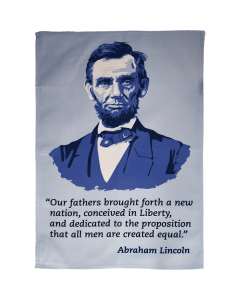
The sixteenth President of the United States, Abraham Lincoln led the Union to victory in the Civil War
Preparing for the frontline, the 54th knew they’d be held to a higher standard than white units, while being treated worse than them.
Despite being recruited with the promise of pay equal to white enlisted men, the 54th were offered $7 per month rather than the standard $13.
For more than a year, the troops nobly boycotted the racist pay offer, turning it into a joke. During bayonet charges the 54th’s battle-cry was “Massachusetts and Seven Dollars a Month!”
Black soldiers (and their white officers) were also guaranteed worse treatment by the enemy.
In a grotesque mirror of Lincoln’s Emancipation Proclamation, the rebel president Jefferson Davis proclaimed in December 1862 that any Black Union soldier taken prisoner would be executed.
The prospect of thousands of Black troops in the Union Army was a logistical and ideological nightmare for the Confederacy.
African Americans were a huge reserve of willing manpower, and their presence would inspire further rebellion by their enslaved comrades in the South.
So, the Confederacy opted for a policy of terror.
On 12 April 1864, for instance, rebel soldiers massacred African American troops at Fort Pillow in Tennessee after they’d surrendered.
But none of this deterred the men of the 54th Massachusetts. They knew when they signed up that the Confederacy was a barbaric cause led by barbaric men.
The Reconstruction Amendments, which abolished slavery and addressed citizenship rights after the Civil War, were adopted between 1865 and 1870
The 54th headed out from Boston on 28 May 1863, to the frontline in South Carolina.
Their first battle was at Grimball’s Landing, outside Charleston, where the regiment held off a frontal attack while heavily outnumbered.
The 54th was afterward praised for their “steadiness and soldierly conduct” in combat.
But their finest hour was still to come, at the Second Battle of Fort Wagner on 18 July.
Fort Wagner was a rebel stronghold guarding the entrance to Charleston Harbour. And it was impenetrable.
Infantry had to approach across a narrow spit of marshland while in range of the Fort’s guns.
But the 54th Massachusetts decided to take up the vanguard, leading 4,000 Union troops – including another African American unit, the 3rd United States Colored Infantry – in a nighttime charge to take the Fort.
Against all odds, the 54th captured Wagner’s outer wall and held it for an hour, but they were eventually forced to withdraw.
The regiment suffered 270 casualties – almost 50% – in the battle, including Colonel Shaw.
One of its non-commissioned officers, Sergeant William Harvey Carney, was later awarded the Medal of Honor for carrying the U.S. flag through the fight.
The 54th Massachusetts almost did the impossible at Fort Wagner. Its courage there and throughout the campaign changed what was possible nationwide.
The example of the 54th justified the concept of African American soldiers in the Union, and soon tens of thousands were mobilised.
The Union was now spearheaded by the largest ever army of Black men fighting for abolition in history, and they were going to win.
Who were our radical ancestors? What's the legacy we're following? To understand the present, we have to look back at our past, and that's exactly what Pete's radical history emails and blog posts do.
With so many remarkable individuals, It's impossible for Pete to choose his favourite figure from radical history, but if he had to, he'd say Sylvia Pankhurst: "She always appreciated that the struggles for feminist, economic, and racial emancipation are linked together, and she did all of her politics with that truth in mind. Also, like me, she's a Mancunian!"