The store will not work correctly when cookies are disabled.
We use cookies to make your experience better.
To comply with the e-Privacy rules, we need to ask for your consent to use non-essential cookies (such as analytics and marketing). You can allow or decline these cookies. Essential cookies (for things like basket and checkout) will always be used. For more details, please see our Privacy Policy.
Born on this day in 1859, Florence Kelley spent her life fighting for the interests of the working class...
“…the finest rough-and-tumble fighter for the good life for others that Hull House ever knew.”
Friedrich Engels’ The Condition of the Working Class in England was probably the most influential work of social commentary written in the nineteenth century.
And it was translated into English by an American woman called Florence Kelley.
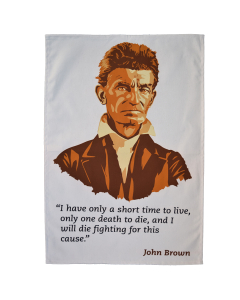
Kelley was born in 1859, the same year as abolitionist John Brown's heroic raid on Harper's Ferry
Born on this day in 1859 in Philadelphia, Kelley grew up to become a champion of working-class women and black civil rights in the U.S.
She was raised in a white abolitionist household: her dad, William Kelley, was a founder of the antislavery Republican Party, supporting Abraham Lincoln in Congress.
Florence learned a politics of social justice at home which she’d carry on for the rest of her life.
She challenged sexist discrimination in American education, becoming one of the first ever women to graduate from Cornell.
And then, studying abroad in Switzerland - a hotbed of European political exiles - Kelley became a self-proclaimed socialist.
Kelley was working in Chicago not long after the Haymarket Affair of 1886, a turning point in American radical politics
It was in this period, in 1887, that Kelley translated Engels’ magnum opus, bringing its anticapitalist message to an English-speaking audience worldwide.
She then returned to the U.S. to get more hands-on in her working-class politics.
During the 1890s, Kelley joined Jane Addams’ social project at Hull House in Chicago, agitating for limits on child labour and an end to sweatshop work.
Kelley was also involved in the campaign during this period to mandate a maximum eight-hour working day.
The activism paid off, too, as Illinois became the first state to legally limit the working day for women to eight hours, and prohibit child labour under the age of 14.
To implement these reforms, Florence Kelley was appointed Chief Factory Inspector by the Governor, making her the first woman to hold statewide office in Illinois.
If one side of Chicago labour politics in these decades was the radicalism of the anarchist movement and its Haymarket Martyrs, the other side was Kelley and Addams’ slow-and-steady institution-building.
Along with W.E.B. Du Bois, Kelley helped to co-found the National Association for the Advancement of Colored People
Alongside her class-based agitation, Kelley was also active in antiracist politics, carrying on her family’s abolitionist traditions.
She was a founding member of the NAACP, collaborating with iconic black radicals like W. E. B. DuBois and Ida B. Wells.
She helped organise campaigns against racial discrimination in federal funding for public education, and fought for nationwide anti-lynching legislation.
Kelley died in 1932, on the eve of the New Deal. But she was an activist until the very end.
The torch then passed to a new era of American radicalism, characterised by expanding trade unions and democratic internationalism, as FDR’s administration created more space for progressive politics.
Later generations of labour activists, in Chicago and across the world, were building on fine rough-and-tumble legacies like that of Florence Kelley.
Who were our radical ancestors? What's the legacy we're following? To understand the present, we have to look back at our past, and that's exactly what Pete's radical history emails and blog posts do.
With so many remarkable individuals, It's impossible for Pete to choose his favourite figure from radical history, but if he had to, he'd say Sylvia Pankhurst: "She always appreciated that the struggles for feminist, economic, and racial emancipation are linked together, and she did all of her politics with that truth in mind. Also, like me, she's a Mancunian!"