The store will not work correctly when cookies are disabled.
We use cookies to make your experience better.
To comply with the e-Privacy rules, we need to ask for your consent to use non-essential cookies (such as analytics and marketing). You can allow or decline these cookies. Essential cookies (for things like basket and checkout) will always be used. For more details, please see our Privacy Policy.
Faith’s dad, Wacvie Mussingkon, was a South Sea Islander from what’s now Vanuatu. He had a powerful influence on Faith’s activism.
When he was a teenage boy, Wacvie was ‘blackbirded’ by white Australian labour contractors.
That is, he was kidnapped to do forced labour on a sugar plantation. It was slavery in all but name.
Like the Indigenous peoples, South Sea Islanders would face systemic racism in twentieth-century Australia, a society which self-identified as a ‘white man’s country’.
But Faith Bandler wasn’t only moved by her dad’s suffering; she was also inspired by his courage.
Wacvie escaped the plantation and married Faith’s mum, a Scottish-Indian woman from New South Wales. This allowed him to stay in Australia when other indentured labourers were deported in 1901.
Faith remembered him as defiant:
“He would take absolutely nothing for nothing. And he’d never take an insult on account of his colour. So we all grew up the same. We were all fiercely independent.”
In 1934, Faith left school and moved to Sydney to work as a dressmaker.
When Australia joined World War 2 Faith served in the Women’s Land Army along with her sister, Kath, working on fruit farms to support the Allied supply chain. Their brother, Eddy, died as a Japanese prisoner of war.
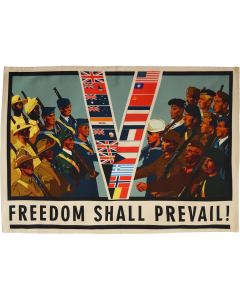
Soldiers from Australia fought alongside the Allied powers against fascism in Europe
Despite the family’s support for the struggle against fascism, racism persisted inside the Australian war effort: non-white women like Faith received less pay in the Land Army.
So, after the war, Faith began to campaign for equal pay for Indigenous workers.
She became more involved in the leftwing milieu of postwar Sydney, meeting the socialist campaigner ‘Red Jessie’ Street and the Aboriginal activist Pearl Gibbs.
It was also in this period that Faith met her husband, Hans Bandler, a Jewish refugee from Nazi Germany who escaped Buchenwald concentration camp.
Hans and Faith both loved classical music, and Hans was a lifelong supporter of Faith’s activism, having experienced the most violent forms of racism himself.
He lost work as an engineer during the Red Scare in Australia because of his marriage to Faith, but he didn’t care.
From her radical milieu in Sydney, Faith launched herself into the struggle for Indigenous rights full-time.
In 1956, she co-founded the Aboriginal-Australian Fellowship with Pearl Gibbs, campaigning against the racist laws and policies shackling Indigenous life in Australia.
These included exclusion from citizenship and welfare benefits, unequal pay, segregation, and the abduction of Indigenous children for enforced cultural assimilation.
The writings of W.E.B. Du Bois and other American civil rights leaders had a significant influence on Bandler's activism
Faith’s campaigning found inspiration in the American Civil Rights movement of the U.S.
Faith read NAACP publications by Black radicals like W. E. B. Du Bois, and in 1960 she drove to Sydney airport to welcome Paul Robeson on his first visit to Australia.
Having founded the Federal Council for Aboriginal Advancement (FCAA) in 1957, Faith led the successful campaign for a constitutional referendum to remove anti-Indigenous discrimination from the Australian Constitution in 1967.
Spearheaded by Faith’s mass petitions and public meetings, the referendum won with more than 90% of the vote.
The result empowered the federal government to legislate nationwide in support of Indigenous civil rights and material wellbeing.
It was the highpoint of Faith’s activist career.
For decades she continued to campaign both for Indigenous and South Sea Islander rights in Australia, fighting the racist legacies and realities of colonialism.
By the time of her death in 2015, she was no longer the ‘red menace’ of the 1950s but a national treasure, given a state funeral in Sydney.
‘The Martin Luther King of Australia’ feels inadequate. Maybe he was the Faith Bandler of the U.S.A.?
Who were our radical ancestors? What's the legacy we're following? To understand the present, we have to look back at our past, and that's exactly what Pete's radical history emails and blog posts do.
With so many remarkable individuals, It's impossible for Pete to choose his favourite figure from radical history, but if he had to, he'd say Sylvia Pankhurst: "She always appreciated that the struggles for feminist, economic, and racial emancipation are linked together, and she did all of her politics with that truth in mind. Also, like me, she's a Mancunian!"